Bankruptcy feels like the end of the road. You have tried everything, yet the bills keep coming and the calls do not stop. But here is something you need to hear: avoiding bankruptcy is possible for more people than you might think. Thousands face this crossroads every year, and many find a path forward without the long-term consequences of a bankruptcy filing. Whether you are exploring debt relief alternatives, weighing Chapter 7 vs Chapter 13, or simply looking for bankruptcy alternatives that protect your credit, this guide walks you through every option available.
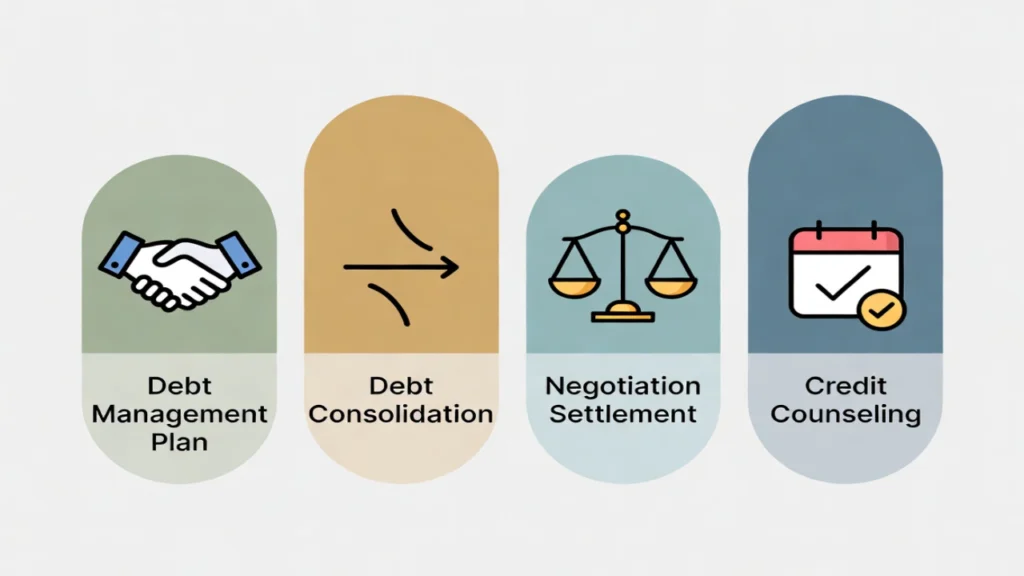
You will learn about debt management plans, negotiation strategies, consolidation options, and practical steps that can help you regain control. The goal is not to judge any path but to make sure you know all your options before making a decision that affects your finances for a decade or more.
What Does Avoiding Bankruptcy Actually Mean?
Avoiding bankruptcy means finding a viable alternative that allows you to resolve your debts without going through the legal process of Chapter 7 or Chapter 13 bankruptcy. It does not mean ignoring your problems or hoping they disappear. It means taking proactive steps to negotiate, restructure, or repay what you owe in a way that avoids the severe credit damage and public record that come with bankruptcy.
Bankruptcy serves an important purpose. For people with overwhelming debt, no realistic ability to repay, and no other options, it provides a fresh start. But it also stays on your credit report for seven to ten years, can affect employment opportunities in some fields, and makes future borrowing more expensive. For these reasons, exploring bankruptcy alternatives first makes sense for almost everyone.
What Bankruptcy Does (And Does Not) Do
- Chapter 7 bankruptcy wipes out most unsecured debts but may require selling non-exempt assets. It stays on your credit report for ten years.
- Chapter 13 bankruptcy creates a three-to-five-year repayment plan. It stays on your credit report for seven years.
- Bankruptcy does not automatically eliminate student loans, recent tax debts, child support, or alimony.
- Bankruptcy is a public record. Anyone can access it, including potential employers and landlords.
Understanding these realities helps explain why avoiding bankruptcy is worth serious effort. The alternatives take time and discipline, but they also leave your financial reputation more intact.
Step-by-Step Guide: How to Build a Bankruptcy Avoidance Plan
If you are serious about avoiding bankruptcy, follow these steps in order. Each step builds on the previous one.
Step 1: Get a Complete Picture of Your Finances
List every debt with balance, interest rate, minimum payment, and creditor contact information. Include your monthly income and all essential expenses. Do not guess. Use bank statements and credit reports. This clarity alone often reduces anxiety because you stop wondering and start knowing.
Step 2: Identify Your “Why”
What caused the debt? Job loss? Medical emergency? Divorce? Overspending? The answer shapes your strategy. A temporary hardship calls for temporary solutions like forbearance. A long-term income problem may require a debt management plan or settlement. Be honest with yourself here. The right fix depends on the real problem.
Step 3: Prioritize Your Debts
Not all debts are equal. Secured debts like mortgages and car loans come first because losing your home or transportation creates bigger problems. Tax debts come second because the IRS has powerful collection tools. Unsecured debts like credit cards come last. This priority list guides where to focus your limited resources.
Step 4: Contact a Nonprofit Credit Counselor
Schedule a free session with an NFCC-accredited agency. Do this before calling any creditors. A counselor helps you see options you might miss and gives you credibility when you do negotiate. They also provide documentation that shows good faith effort, which matters if you later need to explain your situation to a judge or creditor.
Step 5: Choose Your Path and Take Action
Based on your counselor’s advice, select one alternative: debt management plan, consolidation, settlement, or self-managed repayment. Then act within two weeks. Indecision costs money and increases stress. Even imperfect action beats perfect inaction.
Alternative 1: Debt Management Plans
A debt management plan (DMP) through a nonprofit credit counseling agency is one of the most structured bankruptcy alternatives. It works well for people with steady income and unsecured debts like credit cards and medical bills.
How a DMP Helps You Avoid Bankruptcy
When you enroll in a DMP, your counselor negotiates with creditors to lower interest rates, waive late fees, and consolidate payments into one monthly amount. You make one payment to the agency, and they distribute funds to your creditors. Most plans last three to five years.
For someone considering bankruptcy, a DMP offers several advantages. It stops collection calls, reduces monthly payments, and provides a clear end date. Unlike bankruptcy, a DMP does not become a public record. Your credit report shows accounts enrolled in a repayment program, but that notation is far less damaging than a bankruptcy filing.
Who Benefits Most From a DMP
- People with $5,000 to $50,000 in unsecured debt
- Those who can afford a fixed monthly payment
- Individuals who want to avoid the public record of bankruptcy
- People who have a steady job but fell behind due to hardship
Alternative 2: Debt Consolidation
Debt consolidation combines multiple debts into a single loan, ideally with a lower interest rate than your current accounts. This option works best when you have decent credit and can qualify for a consolidation loan or balance transfer credit card.
Consolidation vs. Bankruptcy
Unlike bankruptcy, consolidation allows you to pay your debts in full. It does not appear as a negative event on your credit report. In fact, if you consolidate and make consistent payments, your credit score often improves over time. The main challenge is qualifying. If your credit has already suffered significantly, you may not get approved for favorable terms.
Before committing to consolidation, run your numbers to see if the math works. Our Debt Consolidation Calculator helps you compare your current payments to a consolidated loan scenario.
Types of Consolidation
- Personal loans: Fixed rate, fixed term, no collateral required
- Balance transfer cards: 0% introductory APR for 12 to 21 months
- Home equity loans: Lower rates but puts your home at risk if you default
- Retirement account loans: Borrow from your 401(k) but risk penalties if you leave your job
Alternative 3: Debt Negotiation and Settlement
For debts that are already delinquent or in collections, negotiation strategies can reduce what you owe without filing bankruptcy. Creditors and collection agencies often accept lump-sum settlements for less than the full balance because recovering something is better than recovering nothing.
How Settlement Works
You contact each creditor directly (or work with a reputable settlement company) and offer a lump sum to close the account. For example, you might offer $5,000 to settle a $10,000 credit card debt. If they accept, the account is marked “settled for less than full balance.”
Settlement is not without risks. Forgiven debt over $600 may be taxable. Settled accounts still appear on your credit report. And if you stop making payments to save for a settlement, you risk lawsuits. But for people who have already fallen behind, settlement can resolve debts faster than bankruptcy and without the public record.
Alternative 4: Credit Counseling and Budget Restructuring
Sometimes, the best way to avoid bankruptcy is simply getting professional help to rebuild your budget. A certified credit counselor can review your income, expenses, and debts, then help you create a realistic spending plan.
This option works well when your debt is manageable but your stress and disorganization make it feel impossible. A counselor helps you prioritize payments, identify unnecessary expenses, and create a timeline for becoming debt-free. Many people discover they can avoid bankruptcy entirely just by getting organized and using proven repayment methods like the snowball or avalanche approach.

Comparison of Bankruptcy Alternatives
This table helps you compare the main alternatives side by side.
| Option | Best For | Credit Impact | Timeframe | Public Record |
|---|---|---|---|---|
| Debt Management Plan | $5k-$50k unsecured debt, steady income | Moderate, temporary dip then recovery | 3 to 5 years | No |
| Debt Consolidation | Good credit, want single payment | Mild dip from credit check, then positive | 2 to 7 years | No |
| Debt Settlement | Already delinquent, have lump sum | Significant damage, accounts show settled | 1 to 3 years | No |
| Credit Counseling Only | Mild to moderate debt, need structure | Minimal to none | Ongoing | No |
| Chapter 7 Bankruptcy | Overwhelming debt, no repayment ability | Severe, stays 10 years | 4 to 6 months | Yes |
Common Mistakes When Trying to Avoid Bankruptcy
Even with good intentions, people sometimes make choices that make their situation worse. Avoid these pitfalls.
Mistake #1: Ignoring Creditors and Hoping It Goes Away
Debt does not disappear. Ignoring calls and letters leads to lawsuits, wage garnishment, and bank levies. Engaging with creditors, even to explain your situation, often opens doors to solutions you did not know existed.
Mistake #2: Dipping Into Retirement Savings Without a Plan
Borrowing from a 401(k) can feel like a lifeline, but if you leave your job, the loan becomes due immediately. Withdrawals trigger taxes and penalties. Use retirement funds only as a last resort and with professional advice.
Mistake #3: Falling for “Too Good to Be True” Offers
Companies that promise to erase debt for pennies on the dollar often charge high upfront fees and deliver little. Some even advise stopping all payments, which leads to lawsuits. Stick with reputable nonprofits or handle negotiations yourself using proven negotiation strategies.
Mistake #4: Filing Bankruptcy Without Exploring Alternatives
Bankruptcy is a powerful tool, but it is also permanent. Once you file, you cannot undo it. Many people who file Chapter 7 later wish they had tried a DMP or settlement first. Take time to explore all options.
Pro Tips: Advanced Strategies for Avoiding Bankruptcy
These strategies go beyond basic advice. They come from people who successfully avoided bankruptcy and from counselors who have guided thousands through the process.
Use the “Hardship Letter” Effectively
When negotiating with creditors, a well-written hardship letter makes a difference. Explain what happened, how you are addressing it, and what you are asking for. Keep it to one page. Be specific. “I lost my job in March and am now working again at a reduced salary” is more effective than “I have had financial difficulties.” Creditors have templates for hardship programs, but they only offer them when you ask.
Create a “Bankruptcy Alternative” Folder
Keep all documentation in one place: credit reports, creditor communications, settlement offers, payment records, and your counselor’s recommendations. If a creditor threatens legal action, you can show you are actively working toward a solution. This often slows down collection efforts and buys you time.
Consider a “Debt Snowball Plus” Approach
If you choose self-managed repayment, combine the snowball method (smallest balance first) with negotiated interest reductions. Call each creditor and ask for a hardship rate before you start paying aggressively. Even a 5 percent rate reduction on a $10,000 balance saves $500 per year and accelerates your progress.
Know When to Walk Away From a Negotiation
Some creditors refuse reasonable offers. If you hit a wall, shift focus to other debts. Sometimes a creditor that says no today says yes next month, especially near quarter end or year end when collection teams face quotas. Patience paired with strategic timing works.
Best Use Cases: Who Avoids Bankruptcy Successfully?
These three profiles show how different people successfully avoided bankruptcy using different strategies.
Profile 1: The Medical Debt Crisis
Situation: Sarah, 42, accumulated $28,000 in medical bills after emergency surgery. She has a stable job making $55,000 per year but could not afford the sudden debt.
Solution: She contacted the hospital’s financial assistance department and qualified for a 40 percent reduction based on income. For the remaining balance, she enrolled in a debt management plan that lowered her monthly payment to $320 over four years.
Result: No bankruptcy, preserved credit, and a clear payoff date.
Profile 2: The Credit Card Spiral
Situation: Marcus, 35, had $32,000 across six credit cards with rates averaging 24 percent. He was current but drowning in minimum payments.
Solution: He qualified for a debt consolidation loan at 11 percent through a credit union. His monthly payment dropped from $980 to $690, and he committed to closing the cards after transfer.
Result: Avoided bankruptcy, improved credit score within 18 months, and paid off the loan in four years.
Profile 3: The Post-Divorce Reset
Situation: Elena, 39, inherited $18,000 of joint credit card debt after divorce. Her income was limited, and she faced collection calls daily.
Solution: She worked with a credit counselor who negotiated settlements on two accounts for 45 percent of the balance using money from a family gift. The remaining accounts entered a three-year debt management plan.
Result: Avoided bankruptcy, stopped collection calls, and rebuilt her credit from 520 to 680 within two years.
When Bankruptcy May Be the Right Choice
While this guide focuses on avoiding bankruptcy, it is important to acknowledge when bankruptcy might actually be the best option. Bankruptcy is designed to help people in genuine distress. It is not a moral failing. It is a legal tool.
Signs Bankruptcy May Be Necessary
- You have no realistic way to pay your debts within five years
- You face wage garnishment, bank levies, or lawsuits
- Your debt is primarily medical bills from a catastrophic illness
- You are behind on your mortgage and facing foreclosure
- You have tried alternatives and they did not work
If these describe your situation, consulting a bankruptcy attorney is a responsible step. Most offer free initial consultations. The goal is to know your options, not to commit to any path.
Frequently Asked Questions About Avoiding Bankruptcy
1. Can I avoid bankruptcy if I have no income?
If you have no income and no prospect of income, alternatives like debt management or consolidation may not work. In that situation, bankruptcy may be the only realistic option. A credit counselor can help you assess this honestly.
2. How long does it take to recover from bankruptcy alternatives?
With a debt management plan, credit often improves within 12 to 24 months of consistent payments. With settlement, recovery takes longer, typically two to three years after accounts are settled. Both are faster than the seven to ten years bankruptcy stays on your report.
3. Will creditors sue me if I try to avoid bankruptcy?
There is always some risk of lawsuits, especially with larger debts and if you stop paying. However, most creditors prefer negotiating over suing, because lawsuits cost them money. Being proactive and communicating reduces your risk significantly.
4. Can I negotiate with creditors myself without a company?
Absolutely. Many people successfully negotiate their own settlements and hardship plans. Use the negotiation strategies outlined in our related guide. Creditors often respect self-representation because it shows genuine effort.
5. What is the difference between Chapter 7 and Chapter 13?
Chapter 7 wipes out unsecured debts quickly but may require selling non-exempt assets. Chapter 13 creates a three-to-five-year repayment plan and allows you to keep assets like a home. Both have long-term credit consequences. A bankruptcy attorney can explain which, if either, fits your situation.
6. How do I know if a debt management plan will work for me?
Contact an NFCC-accredited credit counseling agency for a free session. They will review your finances and tell you honestly whether a DMP makes sense. If it does not, they will explain why and suggest alternatives.
7. Can I avoid bankruptcy if I have student loan debt?
Student loans are rarely dischargeable in bankruptcy. If student loans are your primary debt, focus on income-driven repayment plans, deferment, or forbearance rather than bankruptcy. Consolidation may also help simplify payments.
8. What should I do if I already started the bankruptcy process but want to stop?
You can dismiss a bankruptcy filing in most cases, especially if you filed voluntarily. However, consult your attorney before doing anything. Dismissing without a solid alternative plan can leave you vulnerable to creditors.
Making the Right Choice for Your Future
Avoiding bankruptcy is possible for many people, but it requires honesty about your situation and willingness to take action. The alternatives outlined here—debt management plans, consolidation, negotiation, and credit counseling—each offer a path forward without the long-term consequences of a bankruptcy filing.
Start by getting a clear picture of your finances. List every debt with its balance, interest rate, and minimum payment. Know your monthly income and essential expenses. Then, reach out to a nonprofit credit counselor for a free consultation. They can help you see which path makes sense for your specific numbers.
Remember, exploring alternatives is not a sign of weakness. It is a sign of strength. You are taking control rather than letting circumstances dictate your future. And if after exploring all options you decide bankruptcy is the right choice, that is okay too. The goal is to make an informed decision you can live with.
Take five minutes to run your numbers through our Debt Consolidation Calculator. Sometimes seeing the math side by side clarifies which path makes the most sense for your situation.
Disclaimer: This information is for educational purposes only and does not constitute legal or financial advice. Bankruptcy laws vary by state and situation. Consult with a qualified bankruptcy attorney and certified credit counselor before making any decisions about bankruptcy or debt relief.